In commodity trading companies, risk management and accounting closely interact.Hedge accounting is one of the most challenging aspects of business–finance integration. It goes beyond simple accounting entries.Rather, it forms a framework around the true intent of risk management.This framework includes structures such as fair value hedges and cash flow hedges.
Under the frameworks of International Financial Reporting Standards (IFRS) and Chinese Accounting Standards (CAS), hedge accounting has become an essential component of corporate risk management systems.Companies must designate hedge relationships in advance. Companies must continuously assess hedge effectiveness.They must also ensure reliable fair value measurement.In addition, a complete and auditable evidence chain must be established.
However, in commodity trading environments, futures and physical transactions closely interact.Business execution also changes continuously. As a result, hedge accounting faces more complex technical and governance challenges than traditional financial hedging.
Many companies already have risk management capabilities. Yet they lack a systematic governance mechanism that supports the continuous operation of hedge accounting.
This article focuses on high-frequency trading and complex exposure environments. It examines how the Fusion CTRM system can build a practical, sustainable, and auditable hedge-accounting support framework.
To achieve this goal, the article discusses three capability layers:measurement foundations, hedge-relationship governance, and effectiveness and compliance support.Using the practices of H Company and A Company, it explores a systematic implementation path—from data integration to a closed audit loop.
I. Measurement Foundations: Building the Technical Base for Fair Value Valuation
Pain Points
Fair value is the cornerstone of hedge accounting.Its stability directly affects both effectiveness assessment and accounting outcomes.
In commodity trading, hedge instruments and hedged items differ significantly in their valuation structures.
Traders typically mark exchange-traded derivatives to market using exchange settlement prices or market curves.Their valuation paths remain clear, and parameters follow standardized settings.
Physical contracts are far more complex. Their pricing structures may include benchmark prices, premiums or discounts, freight costs, and quality adjustments. Execution volumes and pricing periods also change continuously as companies perform contracts.If companies cannot structure the risk components of physical transactions and incorporate them into a unified market-driven valuation logic, the fair value of hedged items cannot be generated consistently.
As a result, even when companies measure hedge instruments at fair value, futures and physical positions may not align at the level of risk factors.This increases volatility in hedge effectiveness and makes accounting and auditing more difficult.
Therefore, building a unified and stable fair value data foundation—where risk factors are clearly identifiable—is a key technical challenge for implementing hedge accounting.This foundation must ensure valuation consistency between physical commodities and derivatives.
Solution
At the measurement level, the key task is to model and parameterize physical-commodity valuation so that it aligns with derivative valuation logic.
First, pricing formulas for physical contracts are modeled in a structured way. Benchmark prices, premiums or discounts, freight, and other factors are configured as parameters. Forward price curves are introduced. This allows valuation results to be calculated and traced. At the same time, execution volumes, inventory status, and pricing periods are dynamically embedded into the valuation logic. Risk exposures are therefore updated automatically as business progresses.
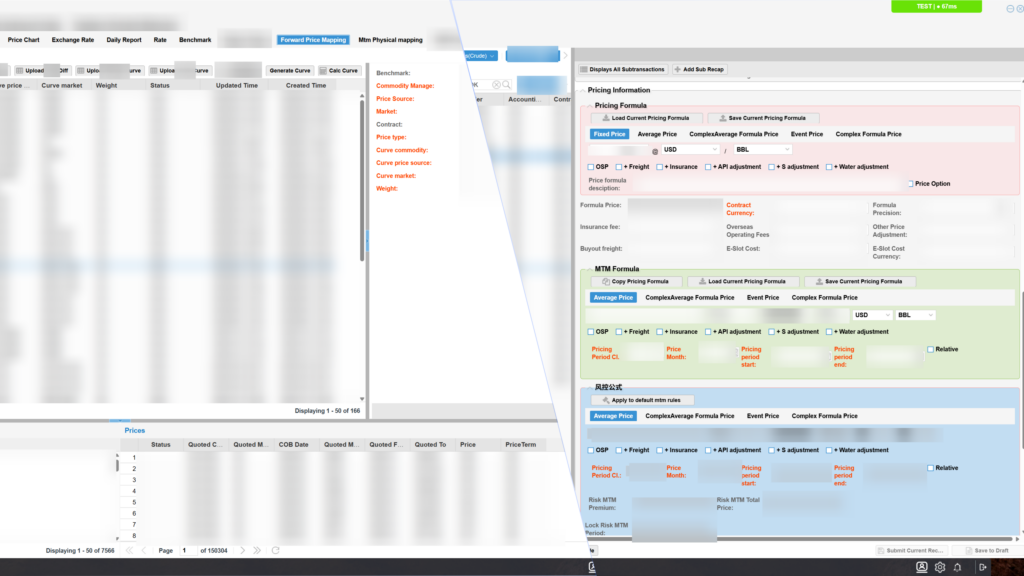
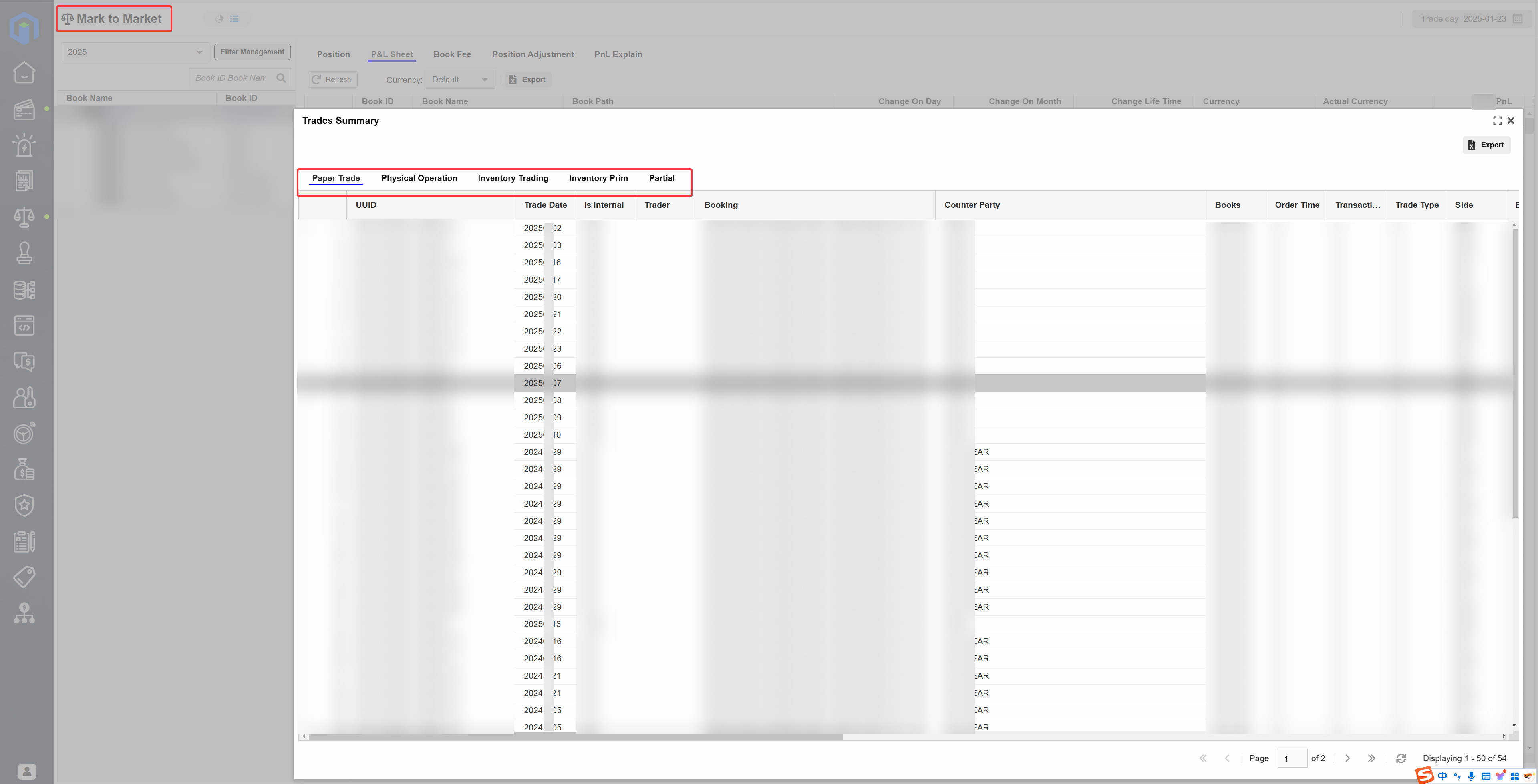
Second, for exchange-traded derivatives and other financial instruments, mark-to-market valuation is performed automatically based on exchange settlement prices.Under the same valuation timestamp, the same market curves used for physical risk components are applied. This ensures alignment between futures and physical positions in terms of risk drivers, volume bases, and time dimensions.
Finally, a stable fair value measurement framework is created.This framework uses a unified valuation timestamp, consistent market data sources, and standardized price curves. It provides a clear and sustainable data foundation for hedge-relationship management and effectiveness testing. It also reduces the impact of valuation discrepancies on accounting results.
Case: H Company’s Valuation System Integration
H Company is a large international oil trading firm. During its preparation for hedge accounting implementation, it faced several challenges in its valuation system:
- Physical valuation relied heavily on manual consolidation of contract terms and market data. Models were inconsistent.
- Changes in execution volumes and inventory were not reflected in valuations in real time.
- Futures and physical contracts used different price-curve sources. There was no unified methodology.
- Month-end valuation workloads were heavy. Valuation volatility and audit costs were high.
To address these issues, H Company used the Fusion CTRM platform to integrate its valuation logic:
- Market data sources and price-curve generation logic were unified.
- Physical contract pricing formulas were configured in structured models. The system supports fixed pricing, pricing-on-quotation, average pricing, and complex formula modeling.
- Execution volumes, inventory status, and pricing periods were embedded in the valuation logic. Risk exposures now update dynamically.
- Derivatives are marked to market automatically using exchange settlement prices. Physical and derivative positions are valued at the same valuation timestamp.
As a result, the system created an integrated valuation framework covering physical contracts, inventory, and derivatives.The system measures all exposures using unified market curves and consistent time dimensions.
Results
After implementation, H Company achieved significant improvements:
- Valuation of physical and derivative positions is now calculated automatically. Efficiency improved by about 70%.
- The discrepancy rate of month-end valuation adjustments fell by about 60%.
- The accuracy of accounting results improved by about 50%.
Transparency in the valuation process and consistency in calculations improved significantly.This provided a stable foundation for hedge-relationship governance and effectiveness measurement.
II. Hedge Relationship Governance: Lifecycle Management and Business–Finance Coordination
Pain Points
After companies establish the fair value measurement foundation, the main challenge shifts to governance of the full lifecycle of hedge relationships.
In commodity trading companies, hedge structures are often complex.They involve multiple risk factors, multiple instruments, and cross-portfolio matching.
A single physical transaction may involve several risks, such as price, foreign exchange, and freight.Companies may need different instruments to hedge these risks.A single financial trade may also hedge multiple physical transactions, forming a portfolio relationship.
In such a structure, the absence of a systematic management mechanism creates major problems.The creation, adjustment, partial termination, and redesignation of hedge relationships often rely on manual records and month-end consolidation. This significantly reduces the efficiency of hedge accounting.
Common issues include:
- Hedge designation information is scattered across Excel files and documents. There is no structured object management.
- Adjustments and terminations are not fully recorded in systems. It becomes difficult to reconstruct the history of risk management actions.
- Finance departments often become involved only at month-end. Accounting processing is therefore delayed.
These problems create data silos and organizational barriers between business and finance teams.Finance departments receive incomplete information. As a result, accounting cannot accurately reflect the outcomes of risk management activities.
Therefore, companies must strengthen lifecycle governance of hedge relationships through systematic management.
Solution
Based on a unified valuation foundation, the Fusion CTRM system builds a lifecycle management framework for hedge relationships.This framework covers creation, operation, adjustment, and termination.Hedge relationships become manageable system objects rather than static document records.
1. Creation Stage: Institutionalized Pre-Designation
The system manages the entry and approval processes for hedging strategies.This ensures that hedge relationships have clear and auditable business records.
Based on the hedging strategy, the system automatically generates a hedge plan.It also links the relevant physical and derivative transactions.As a result, companies formally designate hedge relationships at the early stage of business activities, meeting the pre-designation requirements of accounting standards.
2. Operation Stage: Continuous Management and Dynamic Updates
During the operation of hedge relationships:
- The system automatically updates relationship links as trading portfolios change.
- Users can view detailed transactions and make necessary adjustments.
- Business data remains consistent with financial reporting structures.
Hedge relationships are no longer created through month-end consolidation.Instead, they are updated dynamically as business progresses.This ensures that hedge relationships remain aligned with actual risk exposures.
3. Adjustment and Termination: Full Process Traceability
The system supports relationship adjustments, partial terminations, and early terminations.Each change is automatically recorded, and complete historical versions are preserved.
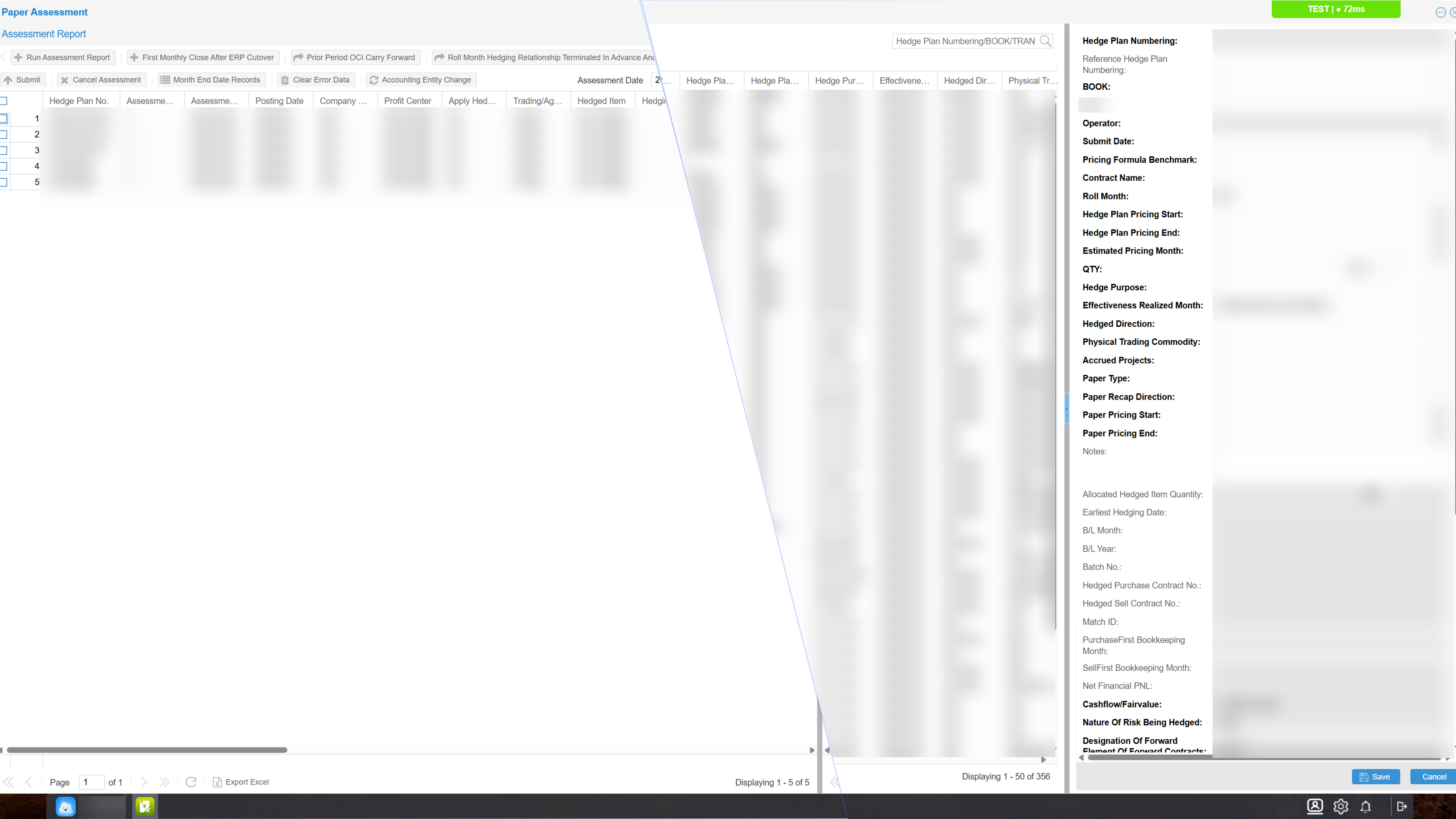
Hedging plans record detailed information, including:
- benchmark references for hedge instruments and hedged items
- hedge direction
- product types
- quantities
- contracts
- pricing periods
- logistics and procurement/sales information
This enables full lifecycle traceability.

Overall, hedge relationship management moves from fragmented record-keeping to systematic governance.Business-side hedging strategies and finance-side hedge plans become fully linked.
Finance teams can participate earlier in the process.This reduces post-event corrections and compliance risks.This significantly improves accounting efficiency and accuracy.
Case: Governance Practices at H Company and A Company
H Company and A Company are both international energy trading firms.As their trading volumes expanded, the complexity of hedge relationship management increased significantly.They also encountered the typical industry problems described above.Month-end reconciliation between business and finance teams became extremely burdensome.
This reduced the effectiveness of hedge accounting management.
After completing valuation standardization, both companies introduced the “hedging strategy + hedge plan” linkage mechanism described above.They established a unified lifecycle management framework for hedge relationships.
Within this framework, companies configure fields and process details according to internal control requirements.This allowed the system to meet different governance environments and operational needs.
Results
After the system stabilized, both companies achieved major improvements:
- Dependence on manual ledgers decreased by more than 80%.
- The coverage of pre-designation for hedge relationships increased to about 85%.
- Business-finance reconciliation time was reduced by about 60–70%.
- The rate of post-event corrections for hedge relationship adjustments decreased by about 50%.
Ultimately, hedge relationship management evolved into a fully system-driven governance model.Companies translate risk management decisions into formal hedge relationship objects at the early stage of business activities.Structured data supports continuous management.
This significantly reduces explanation and reconciliation costs and greatly alleviates month-end accounting pressure.
III. Effectiveness and Compliance Support: Automating Calculations and Enabling Audit Verification
Pain Points
Although unified valuation and traceable relationships reduce the accounting workload to some extent, hedge accounting management still depends heavily on continuous effectiveness assessment.
Accounting standards require companies to verify the economic relationship between hedging instruments and hedged items in every reporting period. They must also quantify the effective and ineffective portions.
This requires a calculation mechanism that can run reliably over the long term. In practice, however, companies face several challenges.
Complex method selection and consistency management.
Different hedge types may require different calculation methods. The logic between these methods varies significantly. Parameter settings can be highly sensitive. Without formal method locking and version control, changes during operation may make results between periods inconsistent and reduce comparability.
Operational pressure increases as scale expands.
In high-frequency trading environments with dynamic portfolio structures, the number of hedge relationships grows rapidly. Evaluation frequency also increases. Calculation tasks become batch-oriented. If the process still relies mainly on manual work, evaluation cycles become longer and timely assessments become difficult.
High risk in linking calculation results with accounting treatment.
The quantified effective and ineffective portions directly affect OCI, current profit and loss, or balance sheet adjustments. If teams manually separate results and create accounting entries manually, efficiency declines. Differences in reporting approaches between periods may also reduce accounting accuracy.
Insufficient traceability of the calculation process.
Under manual processes, teams often do not store calculation logic, parameter assumptions, and adjustment records systematically.When companies need to trace calculation results or explain fluctuations, they must rely on manual reconstruction. This makes it difficult to reproduce the process clearly and increases internal review and external audit costs.
Therefore, companies must build a standardized, automated, and reproducible effectiveness calculation mechanism. This mechanism closes the final gap between risk management and accounting treatment.
Solution
To address these issues, the Fusion CTRM system provides an automated effectiveness calculation and compliance support framework.It integrates calculation execution, result generation, and audit traceability into a unified management process.
1. Institutionalized Methods and Version Management
The system supports classifications such as cash flow hedges and fair value hedges.It also supports multiple effectiveness testing approaches, including:
- critical terms comparison
- regression analysis
- ratio analysis
Companies can select and lock the appropriate method during the hedge relationship designation stage based on hedge type and risk characteristics.
Once a method is designated, it continues to be used in subsequent periods.If changes are required, the system records version history and effective dates. This ensures clear logic between reporting periods and maintains result consistency and comparability.
2. Automated Operation Based on Real Exposures
Effectiveness testing runs automatically based on designated hedge relationships.The system uses valuation results and exposure data already generated. Calculations are performed in batches according to predefined methods.
The system supports periodic execution and batch processing.An effectiveness assessment report is automatically generated for each reporting period. This eliminates the need for manual modeling of each transaction and shortens the evaluation cycle.
The report includes key information such as:
- hedge classification
- designation details
- termination status
- effectiveness ratio and amount
It also provides detailed data on hedging instruments and hedged items. This demonstrates the ongoing economic relationship between them.

Through automation, the calculation process becomes system-driven rather than manually driven.Evaluation capacity is no longer constrained by business scale.
3. Structured Output of Effective and Ineffective Portions
The system automatically quantifies both effective and ineffective portions.It also supports accounting linkage for cash flow hedges, including:
- OCI recognition
- subsequent reclassification from OCI to profit and loss
This provides a direct basis for accounting treatment. It reduces manual separation and repeated data entry, and lowers the risk of inconsistencies between reporting periods.
4. Audit-Ready Verification Mechanism
All calculation logic, parameters, and results are stored in structured form.Each record includes timestamps and responsible users. Historical records are preserved to support retrospective review and recalculation.
This mechanism ensures that calculation results are reproducible and processes are traceable.It provides a complete audit evidence chain and significantly reduces audit risk.
Case
Both H Company and A Company completed valuation standardization and hedge relationship governance.However, during the continuous effectiveness evaluation stage, they faced different challenges due to differences in business complexity.
H Company: Calculation and Audit Pressure in Complex Structures
H Company is a large trading enterprise.Its hedge structure is complex. It involves multiple risk factors, multiple instruments, and cross-portfolio matching.Its main challenges included:
- Heavy workloads from manual modeling of each transaction
- Difficulty tracing historical calculation logic after method adjustments
- Lack of automated linkage between effectiveness results and accounting treatment
- Auditors needing to reconcile data across multiple modules, increasing evidence collection costs
To solve these problems, the system supports configuration of calculation methods by classification.It supports automated batch calculations across multiple portfolio relationships. The system automatically generates structured evaluation reports.The system also supports OCI reclassification for accounting reconciliation.
The system retains all calculation records, allowing auditors to reproduce calculations when needed.
This transformation significantly reduced H Company’s pressure in large-scale calculations and audit evidence reconstruction under complex trading conditions.
A Company: From “Having Data” to “Performing Calculations”
A Company has a relatively simple hedge structure.It maintains limited portfolio relationships.The main challenge was not complexity but the absence of a continuous calculation mechanism.Effectiveness assessments still relied on manual processes, and traceability was weak.
Based on its existing data foundation, the system configured suitable methods and established a periodic automated calculation mechanism. The system generated structured results and preserved historical versions.
The company upgraded its capabilities from simply having data to running institutionalized effectiveness calculations.
Results
Without changing their original business models, both companies achieved significant improvements:
- Effectiveness calculation time reduced by about 75%
- Additional audit documentation requirements reduced by about 60%
- Overall hedge accounting efficiency improved by about 50%
The system created a complete closed-loop process—from method integration and calculation execution to result traceability.Companies with different levels of business complexity can now consistently perform continuous effectiveness evaluation and hedge accounting support calculations.
Conclusion
This article examines the practical implementation of hedge accounting in commodity trading companies.
It outlines a complete capability framework covering measurement foundations, hedge relationship governance, effectiveness testing, and compliance support.
Through the unified fair value valuation logic provided by Fusion CTRM, structured management of hedge relationships, and automated effectiveness evaluation mechanisms, companies can build a full closed-loop process—from risk identification and relationship management to accounting treatment.
The experiences of H Company and A Company show that sustainable hedge accounting is achievable regardless of business complexity.
The key is to establish a clear data foundation, standardized relationship governance, and efficient calculation mechanisms.
The successful implementation of hedge accounting depends not only on understanding accounting standards.It also requires systematic data governance and automated execution capabilities.
Only by building a complete capability framework can companies maintain alignment between risk management objectives and financial reporting in environments characterized by high-frequency trading and increasingly complex portfolios.
Notes:
Hedge Accounting:
A standardized accounting method that records value changes of hedging instruments and hedged items in the same accounting period in profit and loss or OCI (Other Comprehensive Income). It includes categories such as fair value hedges, cash flow hedges, and hedges of net investments in foreign operations.
Hedging Instrument:
A financial instrument used to offset risk. It is typically a derivative such as a futures contract, forward contract, swap, or option. Changes in its value offset the risk exposure of the hedged item.
Hedged Item:
An asset, liability, recognized transaction, or highly probable future transaction that a company seeks to hedge using a hedging instrument.
Hedge Relationship:
The formally designated and documented relationship between a hedging instrument and a hedged item.Hedge accounting requires this designation.
Fair Value:
The price market participants would receive to transfer an asset or pay to settle a liability in an orderly transaction on the measurement date.
Fair Value Hedge:
A hedging arrangement used to offset the risk of changes in the fair value of a recognized asset or liability. Companies usually recognize gains or losses from the hedge directly in profit or loss.
Cash Flow Hedge:
A hedging arrangement used to offset the risk of variability in future cash flows. Companies usually recognize the effective portion of the hedging instrument in Other Comprehensive Income.
Other Comprehensive Income (OCI):
Income or loss items that companies do not recognize in profit or loss for the current period but record directly in equity. Companies often use OCI to record the effective portion of cash flow hedges.
Reclassification from OCI:
When the hedged item affects profit or loss, companies reclassify the accumulated amount previously recognized in Other Comprehensive Income to profit or loss.
IFRS 9 and CAS 24:
These refer to International Financial Reporting Standard 9 — Financial Instruments (IFRS 9) and China Accounting Standard No. 24 — Hedge Accounting (CAS 24).Both standards define the principles and methods for recognition, measurement, and hedge accounting of financial instruments. They provide the primary accounting guidance for companies implementing hedge accounting.
Navigation: Fusion Solution Series Articles
Fusion: Smart Solutions for Physical Commodity Trading
Overcoming Bulk Energy Maritime Logistics Challenges
Fusion for Trade-Centric Finance–Business Integration
Tackling Energy Inventory Challenges with Fusion
Fusion Derivatives Trading: Systematic & Tailored Practices
Fusion Solution: Commodity Trading Market Risk Management
Fusion Applied: Credit Risk Management for Commodity Trading